
Urban areas fundamentally alter the exchange of heat, moisture and momentum between the surface and the atmosphere. Buildings, asphalt and concrete replace vegetation and soil. Traffic, heating systems and industry release additional energy. The geometry of streets and high-rise structures reshapes wind flow and radiation. Together, these factors create a distinct winter microclimate that can differ markedly from surrounding rural areas – sometimes within only a few kilometres.
The Urban Heat Island in Winter
The most well-known feature of the urban climate is the Urban Heat Island (UHI): the tendency for cities to remain warmer than their rural surroundings, particularly at night. In winter, this effect often becomes even more pronounced.
Urban materials such as brick, concrete and asphalt have a high heat capacity. Even weak winter sunshine is efficiently absorbed and stored during the day. At night, this stored energy is released slowly, reducing cooling rates. At the same time, dense building structures limit the escape of longwave radiation. The "urban canyon" effect – narrow streets flanked by tall buildings – traps heat and reduces radiative cooling.
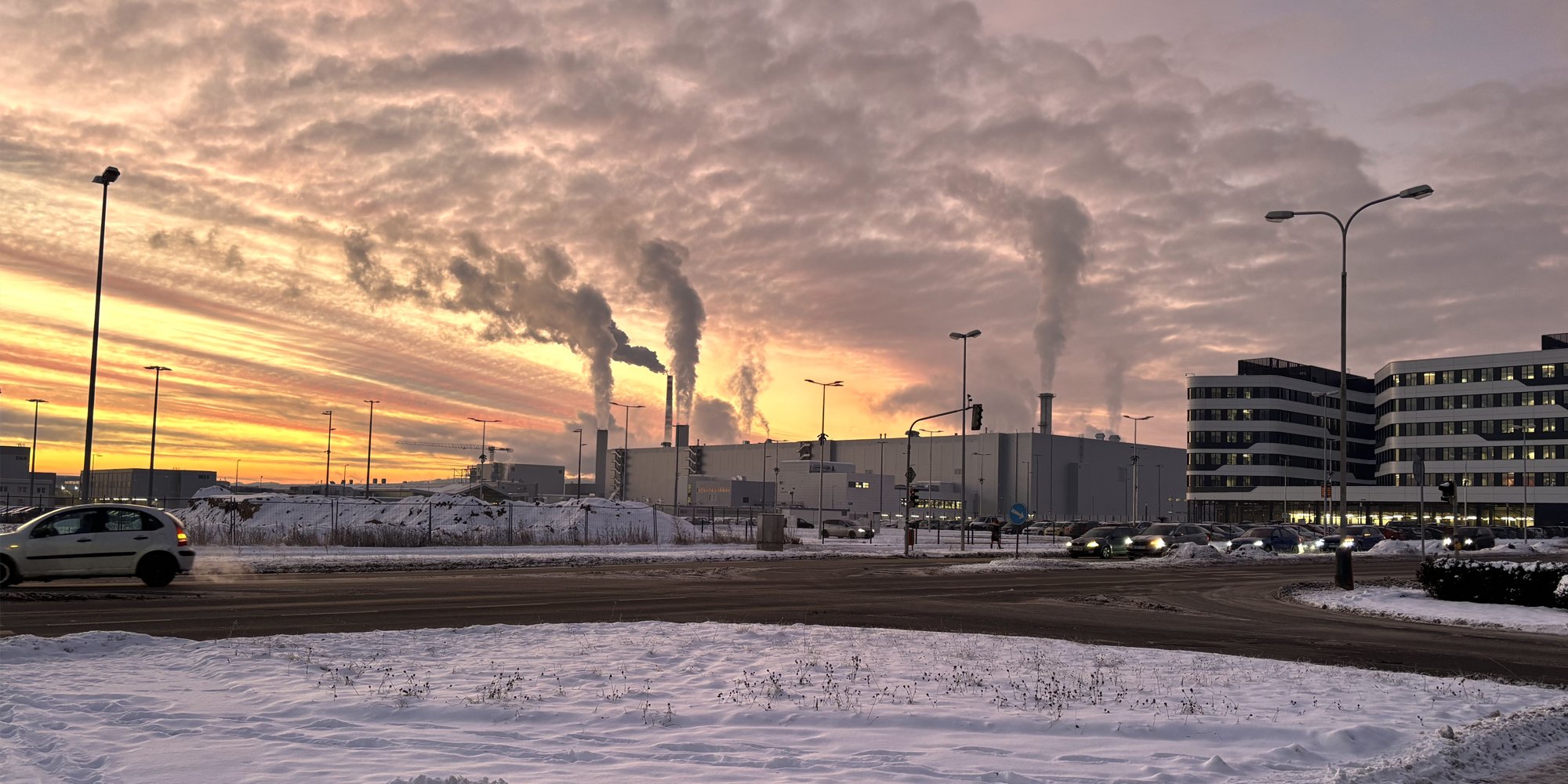
Anthropogenic heat further amplifies the effect. During cold spells, energy consumption peaks. Heating systems, traffic and infrastructure release substantial amounts of waste heat directly into the urban atmosphere. Under calm, stable winter conditions, this additional energy can significantly elevate local air temperatures. And the result is often a measurable temperature difference of several degrees between city centres and rural surroundings. Under clear and windless conditions, the contrast can become particularly strong.
Less Snow, More Freezing Rain
Small temperature differences near 0 °C can have large consequences for precipitation type. In winter, many weather situations occur near the freezing point. A temperature shift of only one or two degrees can determine whether precipitation falls as snow, sleet, freezing rain or rain.
Because cities are typically warmer, marginal snowfall events can shift to rain or wet snow in urban centres. Snow accumulation is often reduced, and any snow that does fall tends to melt more quickly. Near the urban–rural transition zone, freeze–thaw cycles may occur more frequently due to small temperature fluctuations around the freezing point. In certain situations, freezing rain can also become more likely when relatively warm urban air overlies subfreezing surfaces at ground level.
In addition, darker surfaces and active snow removal quickly reduce urban snow cover. Once snow disappears, the underlying asphalt absorbs more solar radiation, reinforcing local warming. This feedback further differentiates city conditions from nearby rural areas where snow may persist for longer periods.
Wind, Stability and Winter Microclimates
Winter weather is often dominated by stable atmospheric conditions. In rural areas, clear nights allow strong radiative cooling and the formation of cold-air pools. In cities, enhanced turbulence caused by surface roughness and building-induced mixing can weaken these inversions locally. While mean wind speeds at street level may be reduced, mechanical turbulence redistributes heat and momentum vertically.
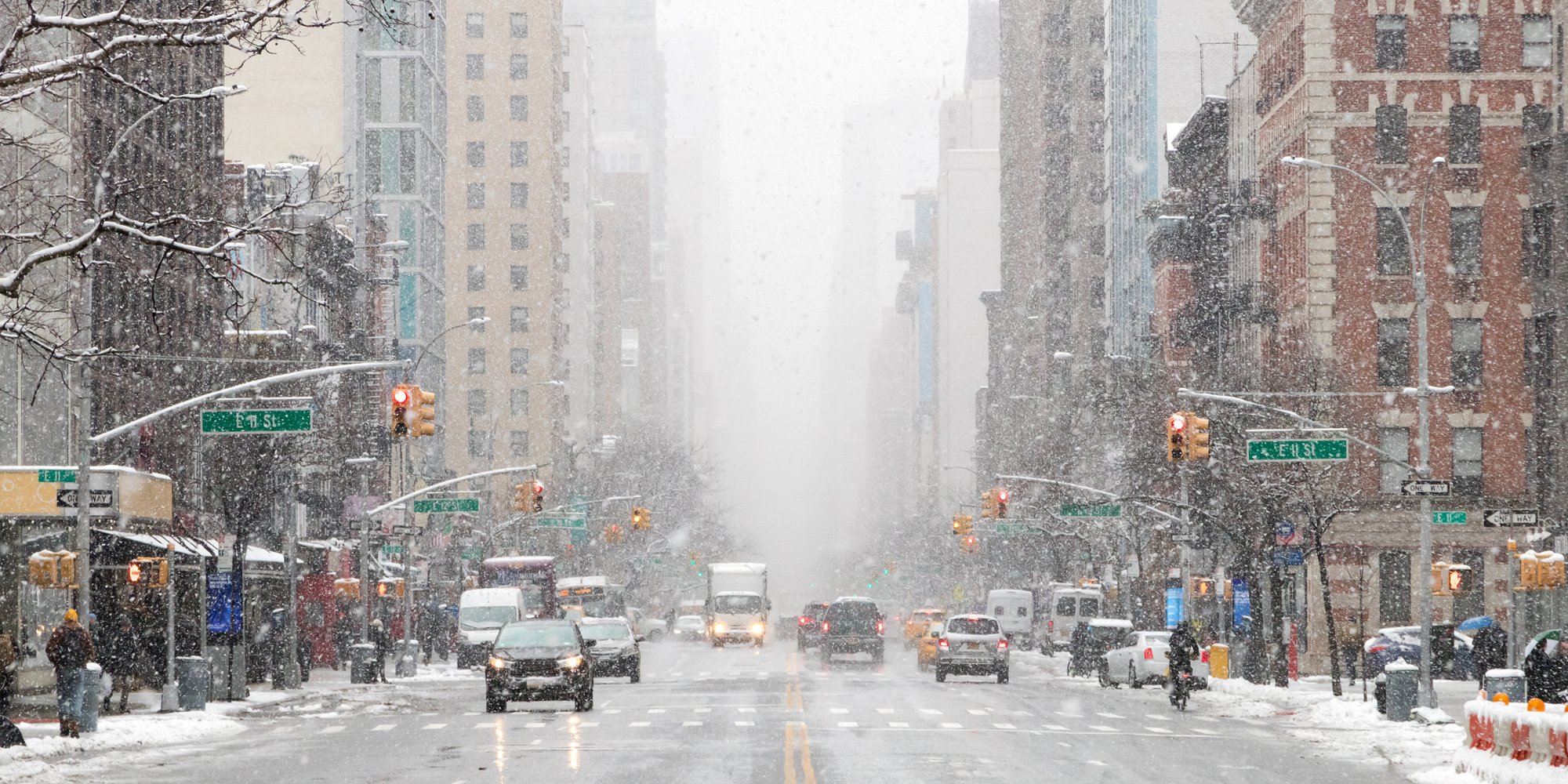
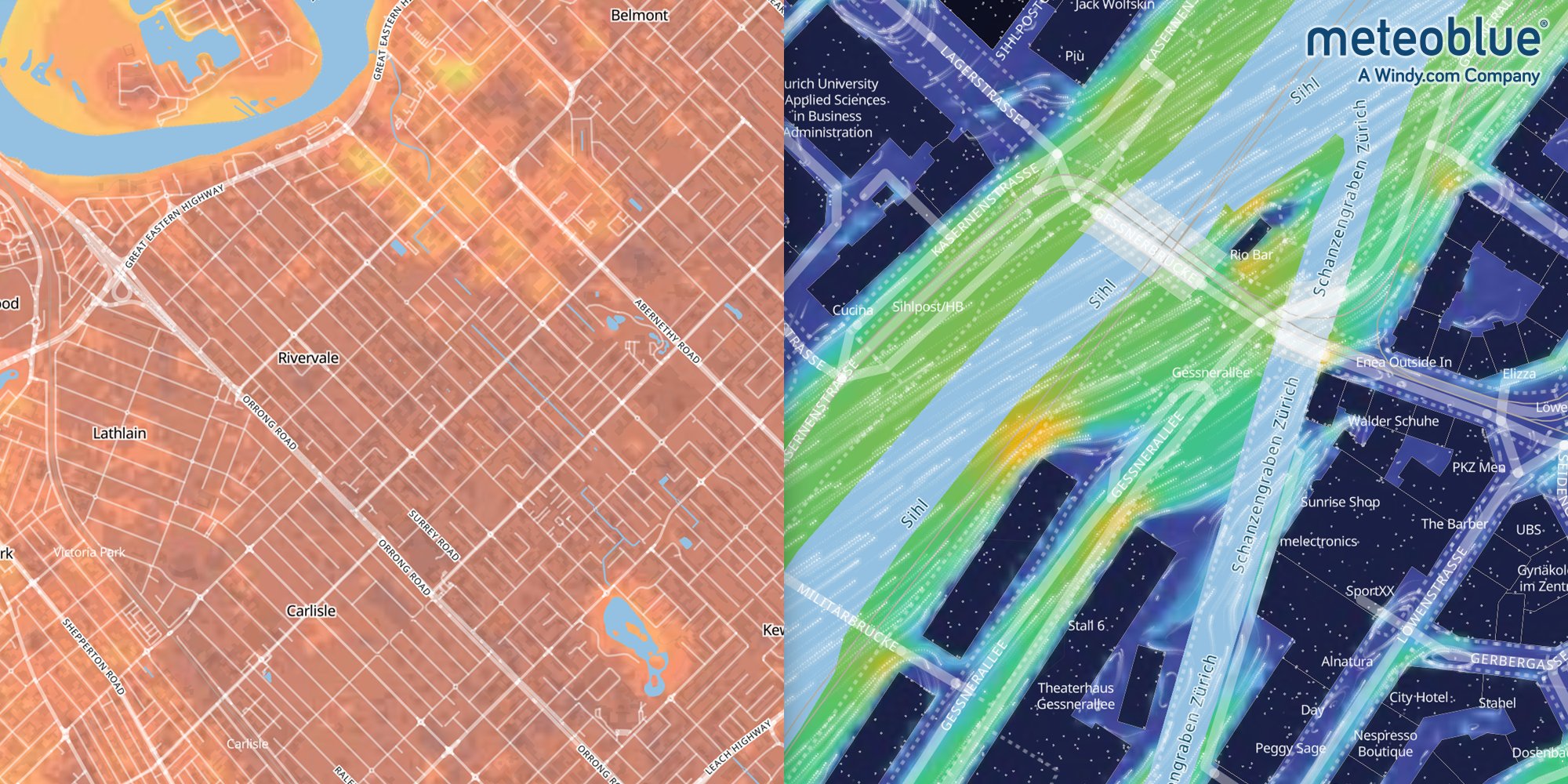
At the same time, urban geometry can channel winds along streets, producing localised gusts and wind chill effects. These microscale variations mean that winter conditions can change significantly from one neighbourhood to another – parks, dense commercial districts and industrial zones may each exhibit distinct temperature and wind patterns.
Why City Forecasts Differ from Rural Forecasts
From a forecasting perspective, urban winter weather presents a particular challenge. Numerical weather prediction models operate on grid cells that average surface characteristics over several kilometres. However, cities are highly heterogeneous environments. Surface materials, building density, vegetation cover and anthropogenic heat emissions vary dramatically within short distances.
If urban effects are not adequately represented in the model physics, forecasts may systematically misrepresent temperature, frost occurrence, snow accumulation or icing risk. A rural grid cell and a dense city centre cannot be treated identically – yet in coarse-resolution models, they often are.
High-resolution modelling and urban canopy parameterisations help capture these processes more realistically. Integrating local observations further improves accuracy by accounting for site-specific effects such as heat retention, cold-air drainage or surface roughness differences.
Urban Climate in a Changing World
As global temperatures rise, the interaction between background warming and urban heat island effects becomes increasingly important. Warmer winters may reduce average snowfall in many cities, but variability remains high. Transitional events near 0 °C – often the most disruptive for transport and infrastructure – may become more frequent.
Understanding urban winter microclimates is therefore not only a scientific question, but also a matter of infrastructure planning, public safety and climate adaptation. Energy demand, road maintenance strategies, water management and building design all depend on reliable, location-specific information.
Urban Climate Expertise at meteoblue
At meteoblue, we work extensively in the field of City Climate. By combining high-resolution weather models, urban parameterizations and local measurement data, we analyse and monitor city-specific weather and climate processes. Our city climate solutions support municipalities, planners and businesses in understanding temperature patterns, heat islands, wind behaviour and precipitation variability at the neighbourhood scale.
Winter weather in cities is the product of complex interactions between built surfaces, human activity and atmospheric dynamics. Recognising and modelling these processes allows for more accurate forecasts – and more resilient urban environments. In the end, winter in the city is a reminder that climate is never purely global or regional. It is also intensely local, shaped by the very structures we build.