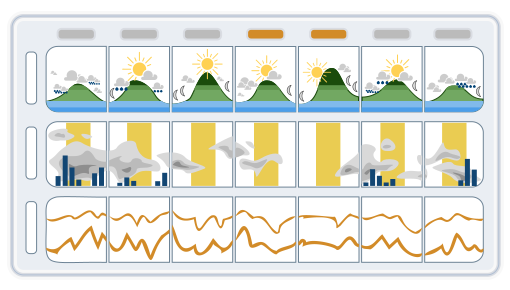
The sea & surf forecast for the region West Houston Medical Center Heliport shows all important information about the weather on the sea. No matter if wave height, wave period or wind speeds, you can find the best surf spot or sailing weather with our marine weather forecast. All meteograms refer to the period of the next six days, with hourly time resolution. Use the meteogram in conjunction with our weather maps to locate the best spot.

Wind speed and gusts
The first meteogram shows the average wind speeds at 10 and 80 meters above the surface. In addition, the wind gusts are displayed. It is important to always consider gusts, as they can exceed by 30-50% the average wind speed and also come from slightly different directions. In general, the wind speed and the significant wave height correlate, meaning the stronger the wind, the larger the waves. In addition, the arrows indicate in each case in which direction the wind is blowing. Check the wind conditions for your surf spot on our wind forecast map.
Precipitation
The second diagram indicates precipitation amounts and the weather conditions are graphically summarized by pictograms. These show sunshine, clouds, precipitation type, intensity and thunderstorms for the time period referenced in the forecast. If you need more precise information about the precipitation, please check our precipitation map or our weather radar.
Swell wave and wind wave height
The third chart shows the different wave heights and direction.
The wind wave height is shown in light blue. These are the waves that were generated by the local winds around the location.
Green-blue are the so-called swell heights. Swells are the waves that have been generated far from the local waters. These waves can originate far out at sea and then travel hundreds of kilometers until they finally become “surf” on the coast.
The significant wave height (dark blue line) represents an average of the largest 33% of all waves (including wind and swell waves) in a given sea area and time period. It is the height an experienced observer would report. Since it is an average, it is quite possible for larger waves (see Rogue Waves)to exceed this value.
The arrows indicate the wave direction in which they are moving. To find the best spot check our wave maps.
Primary wave and swell period
The last table shows the wave and swell period. The period is given in seconds. The number indicates how much time passes from the peak of the first wave to the peak of the second wave. Generally, the longer the intervals between the wave peaks, the more orderly and stronger the waves will hit the shore. Use our wave period maps to find the best spots.
Best weather conditions for surfers
Quick overview of surf conditions (beginners):
- Significant wave height maximum 1.5 meters
- Wind speed should be maximum 40 km/h.
- Ideally moderate offshore winds stabilise the waves, whereas with onshore winds, the waves and the water become disorderly.
Wind condition
The most important factor for wave formation is the wind. The wind creates a water particle movement when it comes into contact with the water (shear stress). These particles then continue to push against one another. As a rule of thumb, the larger the ocean area and the stronger the wind, the larger the waves.
Depending on the wind speed, the waves take on different speeds. If faster waves catch up with a slower preceding wave, this can create superimposed waves, and possibly the so-called rogue waves.
As soon as a big wave meets a strongly rising seabed, it can happen that this wave abruptly discharges forward, creating the famous “tube”.
Another essential point are the offshore and onshore winds. These stand for the respective direction of the wind on the coast. Onshore is the wind that blows from the sea to the land mass, offshore is the wind that blows from the land to the sea. Strong onshore winds can cause big waves breaking on the coast, while offshore winds generate almost no wave near the coast.
Advanced surfers may enjoy situations when strong onshore winds have been blowing for some days, to be replaced by light offshore wind: in these conditions, long swell waves will ensure some (relatively safe) fun.
The actual conditions can be found on our wind map.
Wave period and wave quality
Wave quality correlates with wave period. High waves with a low period (less than 10 seconds) are generally steep and cause violent breakers in shallow waters. Small periods are typical of wind waves, generated by winds blowing actively in the area.
Waves suitable for surfing usually have a long period, as it generally is the case with swell waves.
Hence, for good surfing conditions a longer period is preferable.
Best weather conditions for sailors and boats
The most important factors for boats and sailors are wind, waves and the storm warnings (see our warning map). Waves are a disturbing factor and should be as low as possible in the best case to guarantee a calm sea. Therefore, we will now look at the most important factors to recognize the best sailing weather.
Ideal conditions for beginners:
- Wind speed between 2-3 Bft (4 -10 kn). At this wind speed, manoeuvres are easy to execute and mistakes are forgiven.
- Significant wave height 0 to 1 m
Ideal sail conditions for experienced sailors:
- Wind speed between 4-5 Bft (10-21 kn). At this wind speed, manoeuvres require more strength and better coordination to prevent damage and injuries.
- Significant wave height will be between 1 and 2 meters and waves can break under certain circumstances
Wind
Wind represents the main propulsion for a sailing boat and therefore the first meteorological variable a sailor will consider.
Too little wind (or no wind at all) would force sailors to use the engine (leading to unpleasant “motorboating”) or to just wait for wind to pick-up.
The first thing a sailor will try to ensure when planning a leisure sailing trip is therefore the presence (and permanence) of at least 5 kn of wind for the whole expected duration of the trip.
Wind conditions between force 3 and 5 of the Beaufort scale (7-21 kn) are usually manageable and enjoyable conditions for the average sailor, although the actual comfort of the sailing trip will be dictated also by the wind direction relative to the desired destination and the waves.
Stronger winds require careful evaluation and some good sailing experience. As wind speed increases, in fact, more pressure and stress is applied on the sails and the equipment: maneuvers will become more difficult to execute and mistakes could cause serious damage and/or injuries.
Another important factor to consider is wind gust and mast height: gusts can be 30 to 50% stronger than the average wind speed and sail choices should be done accordingly. Moreover, the relevant wind speed for a sailing boat is the one at 10 m, but sailboats with higher masts should account for higher speeds: with a 15 -20 m mast, a further 10 to 20% should be added to the forecasted average wind speed at 10 m.
It is always good practice to consult the official sea bulletins and weather warnings for the area of interest and also the nearby ones, to avoid being caught at sea in dangerous conditions.
Waves
The significant wave height serves as a good reference value and orientation. It represents the average wave height, from trough to crest, of the highest one-third of the waves.
For waves, the height but also the period are important. The longer the period, less steep is the wave. High waves with very long periods may sometimes pass smoothly underneath the boat, causing ideal surfing conditions. High waves with a short period quickly become unpleasant and steep and could be dangerous if breaking.
If wind blows from the same direction for a long time, waves direction is generally steady, their height proportional to the distance of sea over which wind has been blowing undisturbed ("fetch”). However, if there are sudden changes in wind direction, the so-called "cross-sea" can occur. In this case, waves will start coming from two directions, the one wind was blowing from before and the new wind direction, resulting in a rough, confused sea.