
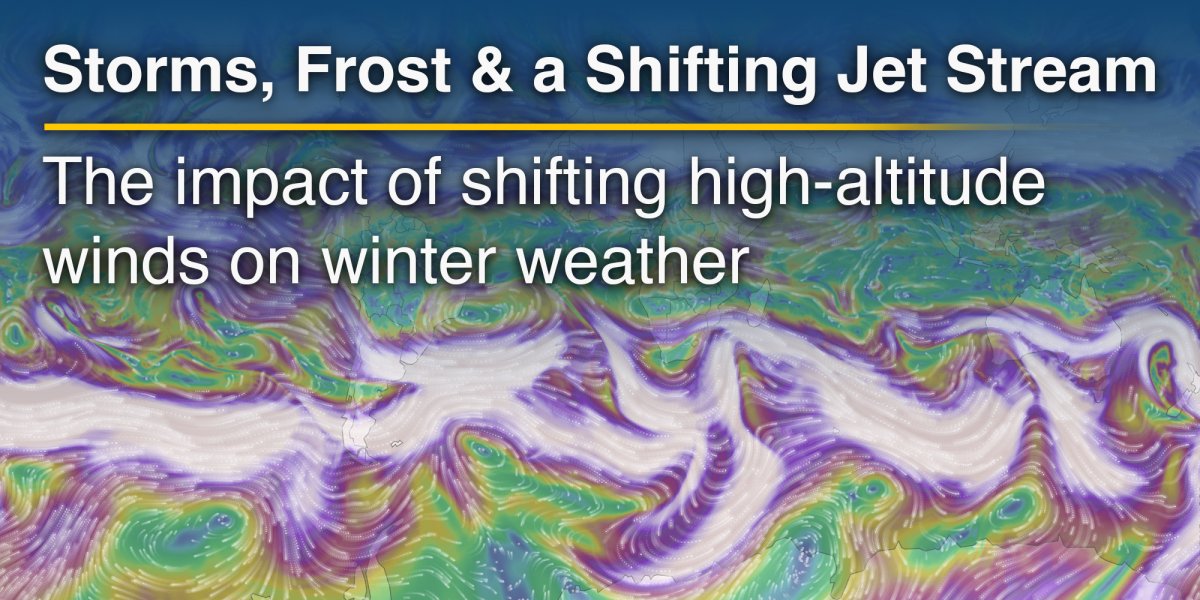
The jet stream is a narrow band of very strong winds flowing from west to east through the upper levels of the troposphere, typically around 9 to 12 kilometres above the ground. Rather than being a single, fixed line, it is better imagined as a broad corridor of fast-moving air, with winds strongest at its core and weakening towards its edges. In places, it can span hundreds of kilometres in width and several kilometres in depth.
Its existence is rooted in temperature contrasts. The Earth receives more heat at the equator than at the poles, and the atmosphere constantly works to redistribute this energy. Where cold polar air meets warmer air from lower latitudes, sharp temperature gradients develop. These contrasts are strongest in winter, when polar regions cool dramatically while the tropics remain warm. Combined with the Earth's rotation and the Coriolis effect, this temperature imbalance gives rise to powerful westerly winds – the jet stream.
In the Northern Hemisphere, two main jet streams dominate. The polar jet is typically found near 50 to 60 degrees north and is the most influential for winter weather across North America, Europe and much of Asia. Farther south lies the subtropical jet, near 30 degrees north, which mainly affects weather patterns closer to the tropics. Similar jet streams also exist in the Southern Hemisphere, circling the globe in a comparable way, though uninterrupted by large land masses, they tend to be more symmetrical and persistent.
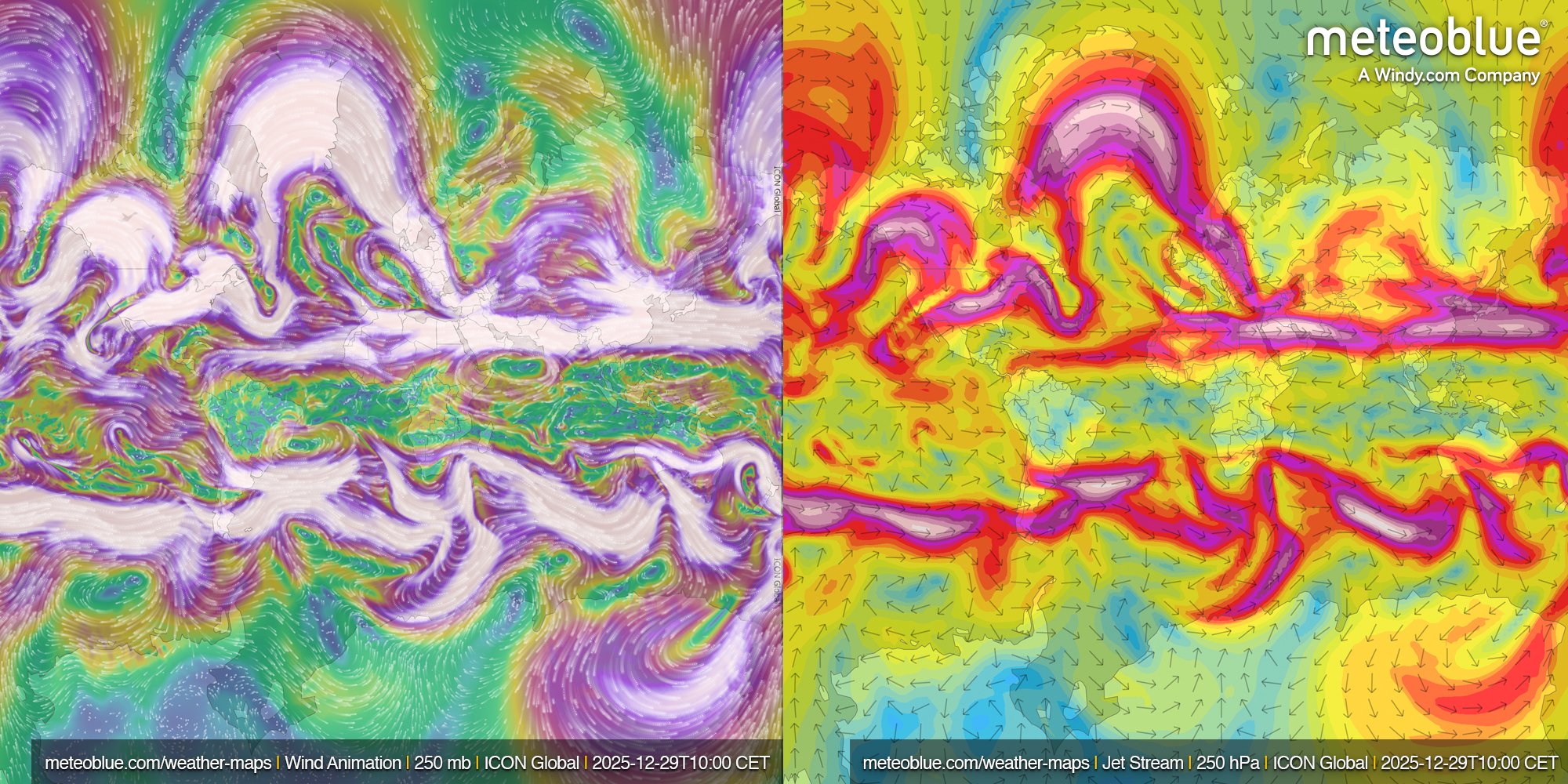
Strong bends in the jet stream steer cold and warm air masses across continents, often leading to longer-lasting and more extreme weather.
The jet stream acts as a steering current for weather systems. Areas of low pressure, which bring wind, rain and snow, tend to form and intensify along it, then move in the direction of the flow. When the jet stream is strong and relatively straight, known as a zonal flow, weather systems travel quickly from west to east. Under these conditions, storms are usually fast-moving and relatively short-lived, and temperature swings are limited.
At times, however, the jet stream becomes more distorted, developing large north–south waves and meteorologists describe this as meridional flow. When this happens, the weather becomes more dramatic and often more persistent. Deep dips in the jet can allow cold Arctic air to surge southwards, bringing widespread frost or snow, while pronounced ridges can transport warm air far north, sometimes leading to unseasonably mild conditions. These meanders also slow the progression of weather systems, increasing the risk of prolonged rainfall, heavy snowfall, cold spells or, in summer, heatwaves.
Winter storms are particularly sensitive to the position and shape of the jet stream. Strong temperature contrasts enhance the jet's speed, and when fast upper-level winds align favourably, they can intensify developing low-pressure systems by removing air from the top of the atmosphere, allowing surface pressure to fall further. Small shifts in the jet's track can therefore make the difference between a major snowstorm and a dry, cloudy day.
In recent years, scientists have paid growing attention to changes in the jet stream's behaviour. As the Arctic warms faster than the rest of the planet – a phenomenon known as Arctic amplification – the temperature contrast between high and mid-latitudes is reduced. Some research suggests this may weaken the jet stream and make it more prone to large, slow-moving waves. When these patterns become locked in place, regions can experience prolonged and extreme weather, from extended cold spells and winter storms to floods or droughts.
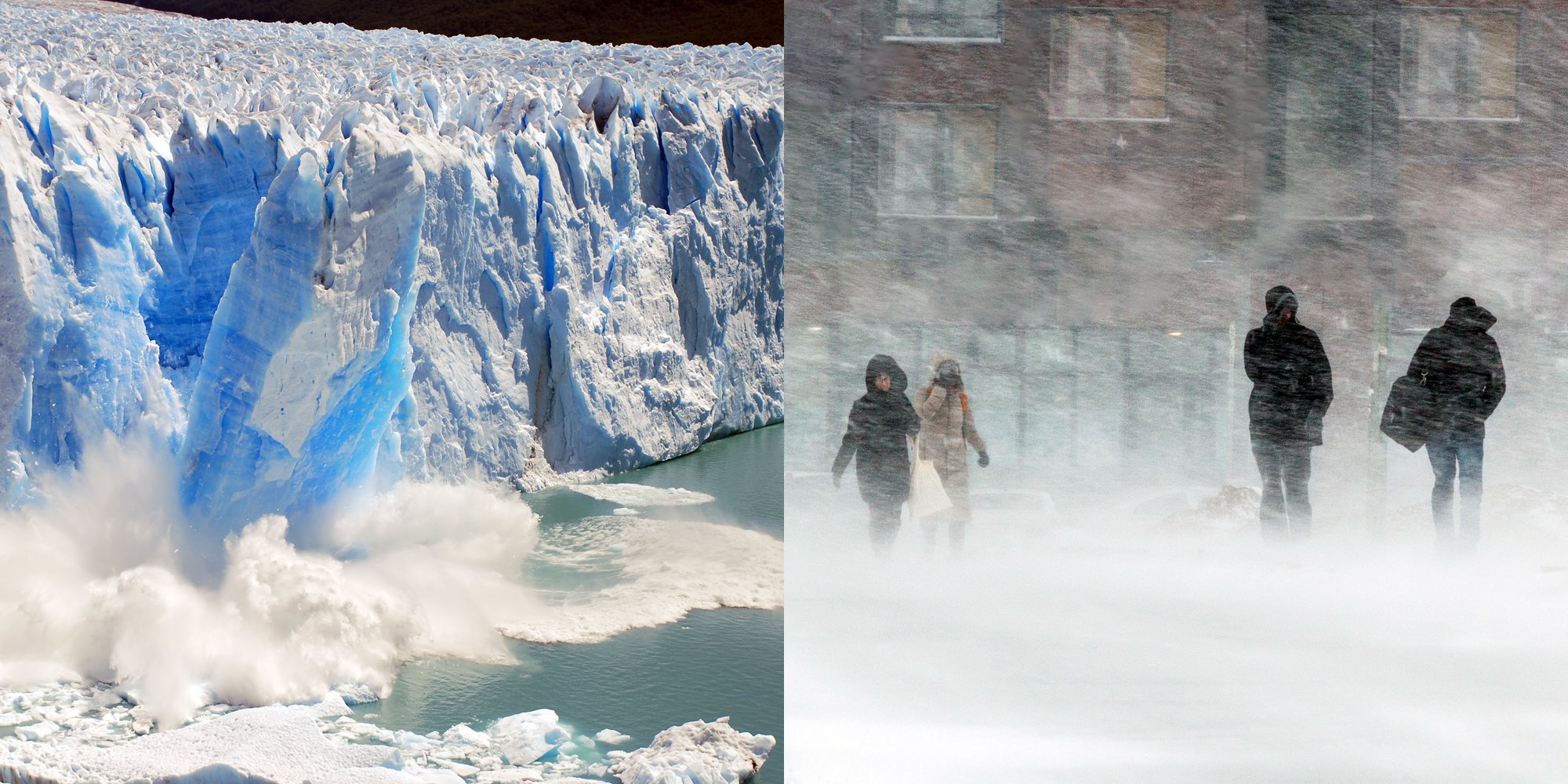
Arctic warming may alter jet stream behaviour, favouring more extreme weather patterns.
The weather we experience at the surface is formed high above us, therefore monitoring the jet stream is essential to modern weather forecasting. Whether winter brings stormy Atlantic systems, calm frosty nights, or sudden cold outbreaks often depends on how this high-altitude river of air twists and turns around the globe. meteoblue provides upper-layer atmosphere forecasts, so you can follow the shifts and movements of global jet streams and see how they influence your region.