
January
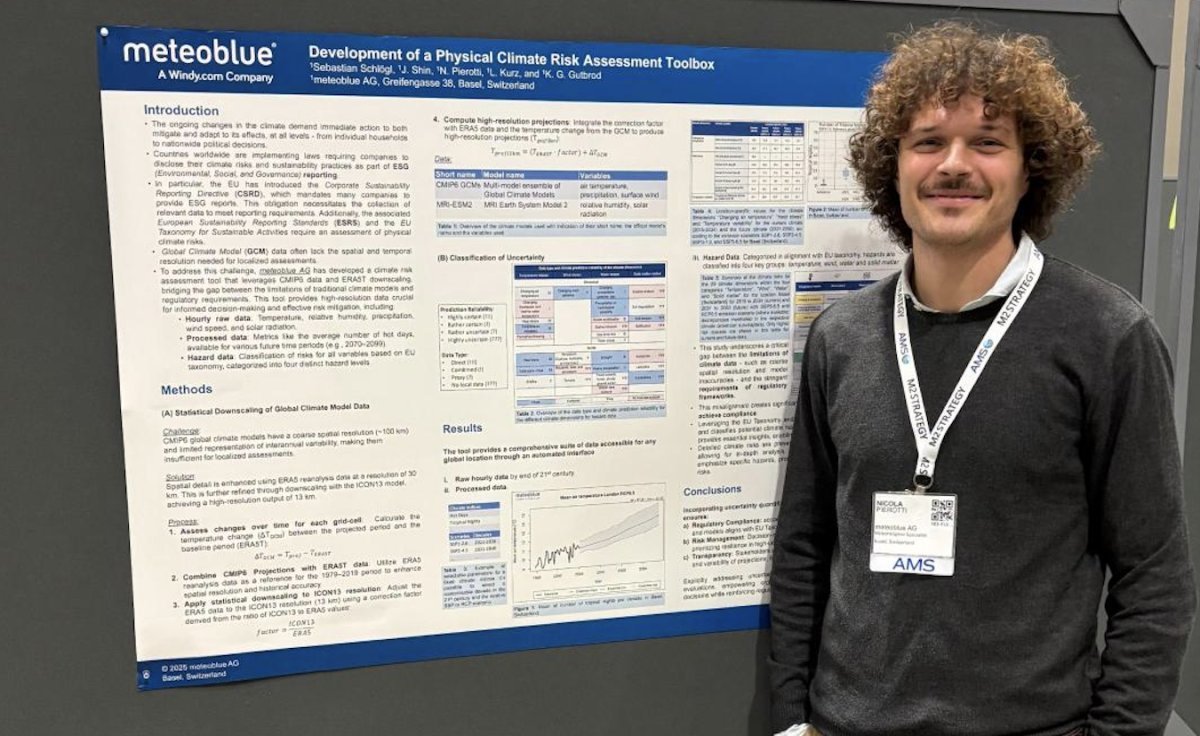
At the beginning of 2025, meteoblue participated in the 105th American Meteorological Society (AMS) Annual Meeting in New Orleans, one of the most important global events for weather and climate science. The conference brought together experts from research, government and industry, providing an excellent platform to exchange ideas and practical solutions.
Our team presented several key innovations, including the Physical Climate Risk Assessment toolbox, the meteoblue City Climate Model for urban heat resilience, insights from high-resolution urban measurement networks, and a verification study of the meteoblue Learning MultiModel (mLM). These contributions served to highlight the focus on high-quality data and actionable climate intelligence that meteoblue stands for.
February
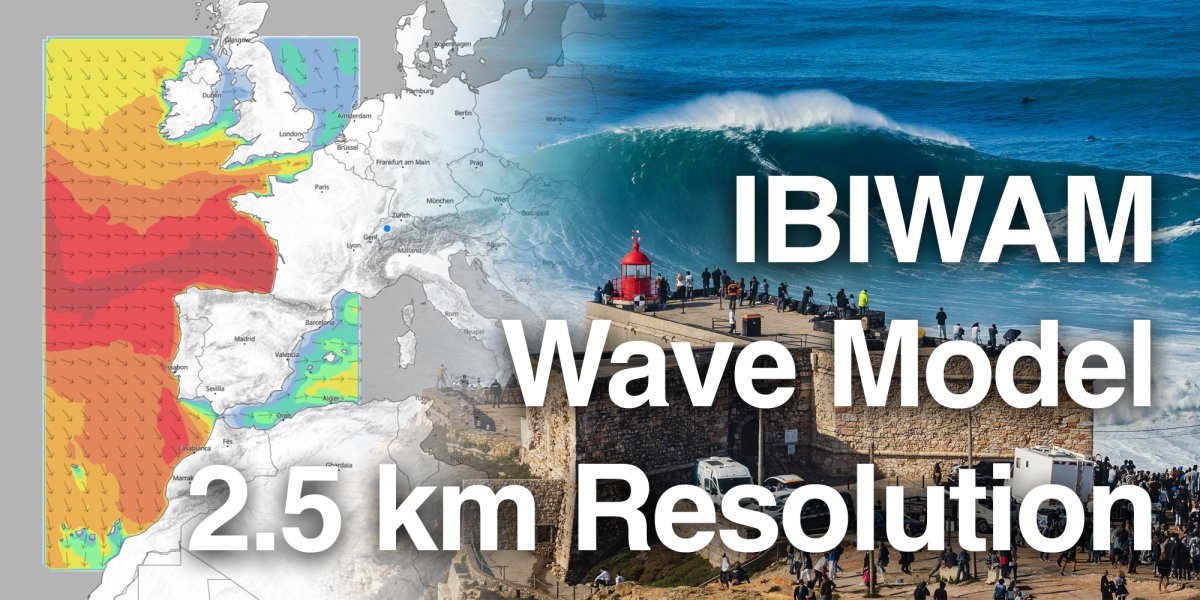
February saw important developments in both product innovation and industry engagement. meteoblue significantly enhanced wave forecasting capabilities with an upgrade of the IBIWAM wave model to a 2.5 km resolution. This improvement provides more detailed and accurate forecasts from the Canary Islands to Ireland, supporting surfers and maritime professionals as well as coastal management and research applications.
Later in the month, meteoblue specialists attended E-world energy & water 2025 in Essen, Europe's leading trade fair for the energy sector. Discussions with partners and stakeholders underlined the growing role of precise weather and climate data in energy forecasting, reinforcing the value of meteorological intelligence across the energy industry.
March
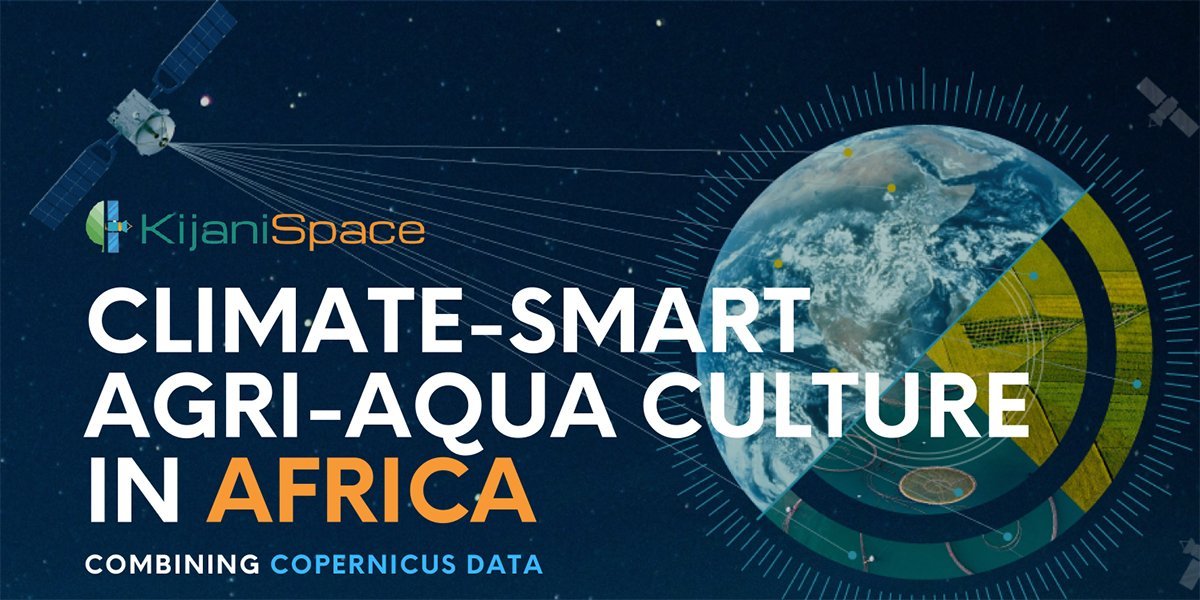
In March, meteoblue joined the Horizon Europe-funded KijaniSpace project, aimed at strengthening climate-smart agriculture in Africa. The initiative combines Copernicus Earth Observation data with IoT technologies to support smallholder farmers and local stakeholders, with a particular focus on the Lake Victoria Basin.
meteoblue contributes weather, climate and environmental datasets, enhanced forecasts using IoT sensor data, and climate risk tools tailored to agricultural needs. Through the involvement in KijaniSpace, company supports sustainable farming practices and resilience to climate change, guided by data-driven decision-making in a region facing significant environmental challenges.
April
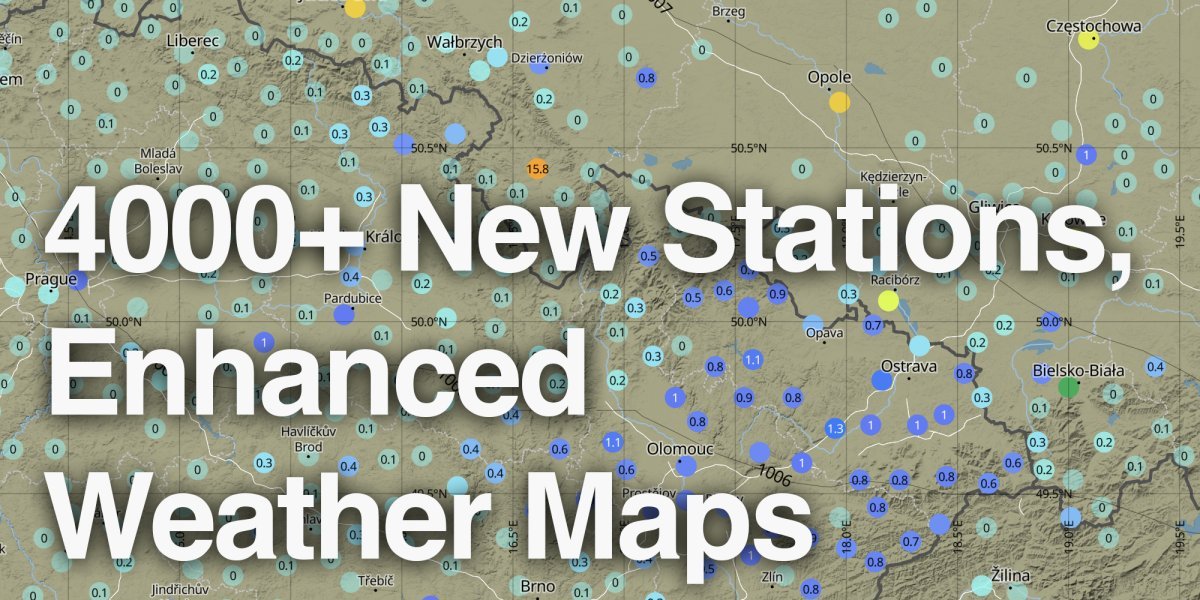
April brought a major expansion of meteoblue observational weather data. Thousands of new high-quality weather stations were added across Europe, Australia and the Americas, significantly strengthening the Observed Weather maps and improving the performance of the meteoblue Learning MultiModel (mLM). Data from national hydrometeorological services now provides more frequent and reliable updates, ranging from 10 minutes to hourly intervals.
This expanded coverage improves real-time weather accuracy for both private users and businesses, supporting better planning in areas such as agriculture, transport and energy. At the same time, April also marked the successful conclusion of the EU-funded STARGATE project. Over five years, meteoblue contributed key climate risk tools for agriculture, including crop and livestock risk indicators and the Huglin Index for viticulture. Through the STARGATE project, company has reinforced its commitment to supporting sustainable agricultural practices by providing innovative tools and data-driven solutions to address the challenges posed by climate change.
May
In May, the enhancement of digital products continued, with updates focused on usability and energy applications. The meteoblue app received an extended forecast range and improved navigation, making it easier for users to explore weather information quickly and intuitively.
A key technical milestone followed with the upgrade of satellite-based solar radiation forecasts, improving the update frequency to 10 minutes across large parts of the Americas and Asia. This improvement allows much more accurate short-term tracking of cloud-driven changes in solar radiation, supporting photovoltaic power forecasting, grid stability and renewable energy integration. Overall, this update further strengthened position of meteoblue as a reliable data provider for the rapidly growing solar energy sector.
June
June was defined by collaboration and knowledge exchange. meteoblue entered into a strategic partnership with Sixense Helimap, combining high-resolution weather forecasts with advanced LiDAR and photogrammetric mapping technologies. By integrating meteorological data into geospatial surveys, the partnership enables the creation of detailed digital twins of infrastructure, supporting engineering projects and simulations under extreme weather conditions.
Alongside this, the meteoblue Climate Services team launched a new webinar series focused on urban climate intelligence. The first session explored digital solutions for urban climate monitoring, showcasing how cities can use real-time data and modelling to strengthen climate resilience. A practical case study from the city of Krefeld demonstrated how meteoblue tools are already supporting climate-adaptive urban planning.
July
Product developments and team highlights were key themes in July. meteoblue expanded the climate+ offering with comprehensive, location-specific Climate Risk Reports designed to support sustainability reporting and regulatory requirements such as CSRD and ESRS. These reports provide fast, audit-ready assessments of physical climate risks, helping organisations identify and manage climate-related impacts with confidence.
The annual meteoblue Day brought the team together for a summer retreat in southwest Germany. Over several days, colleagues engaged in shared outdoor activities, discussions, and reflections, making the most of the summer atmosphere to build stronger team connections.

August
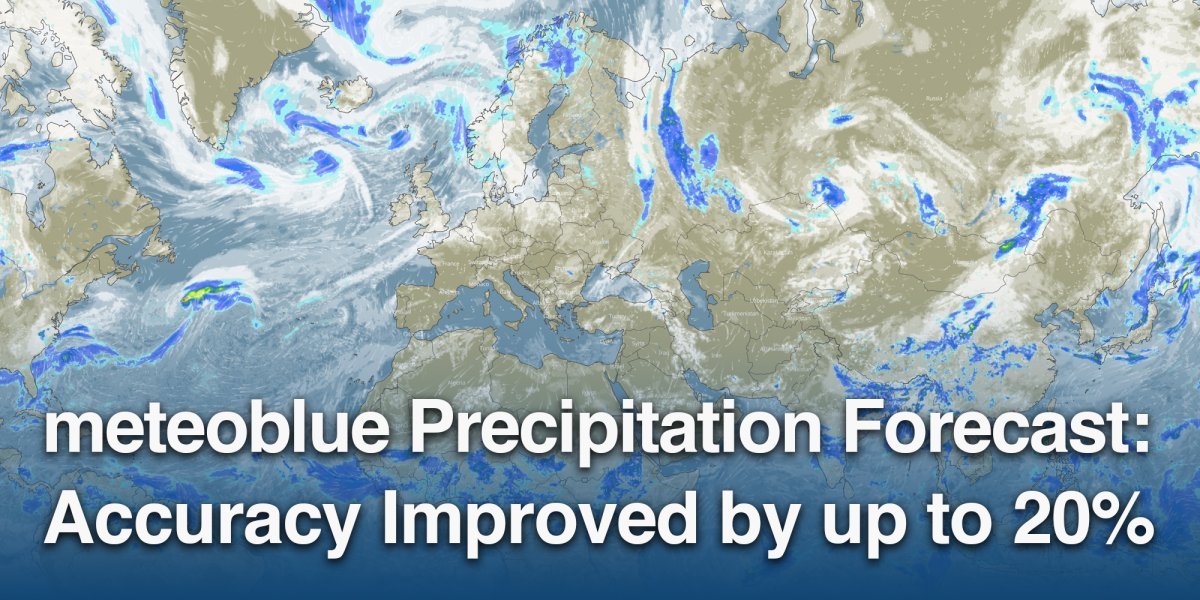
In August, meteoblue achieved a breakthrough in precipitation forecasting. Continuous improvements to the meteoblue Learning MultiModel resulted in a 10–20% increase in the accuracy of precipitation timing forecasts, particularly in the 48–72 hour range. This advancement improves one of the most critical aspects of weather prediction: knowing when rain will occur.
The enhanced forecasts are now available across all meteoblue platforms and APIs worldwide, benefiting users operating in weather-sensitive sectors, as well as everyday planning.
September
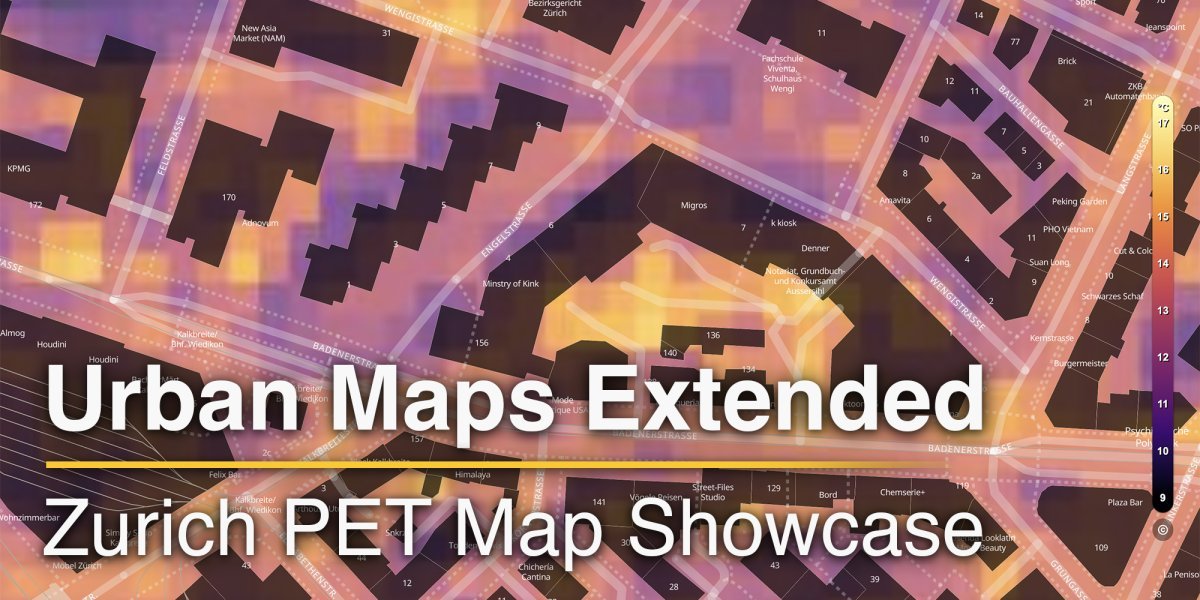
In September, the focus lay on expanding urban climate intelligence and supporting renewable energy initiatives. meteoblue launched the high-resolution Urban PET (Physiological Equivalent Temperature) Map for Zurich, enabling city planners and citizens to visualise thermal comfort across the urban landscape. By integrating temperature, wind, humidity, and solar radiation data, the PET Map provides actionable insights for mitigating heat stress and improving public wellbeing. With a 3×3-meter resolution and three-day forecasts, this tool supports climate-adaptive planning and real-time decision-making as one of the most advanced Urban Maps platforms worldwide.
Also this month, meteoblue supported solar innovation at the Bridgestone World Solar Challenge 2025 in Australia. The highly accurate weather and solar radiation data provided by meteoblue enabled participating teams, including the Belgian Innoptus Solar Team, to optimise performance in challenging weather conditions. In the same vein, at ISUenergy 2025 in Falera, Switzerland, meteoblue specialists contributed expert knowledge and data to a global cohort of students exploring practical renewable-energy solutions, strengthening the next generation of energy experts.
October
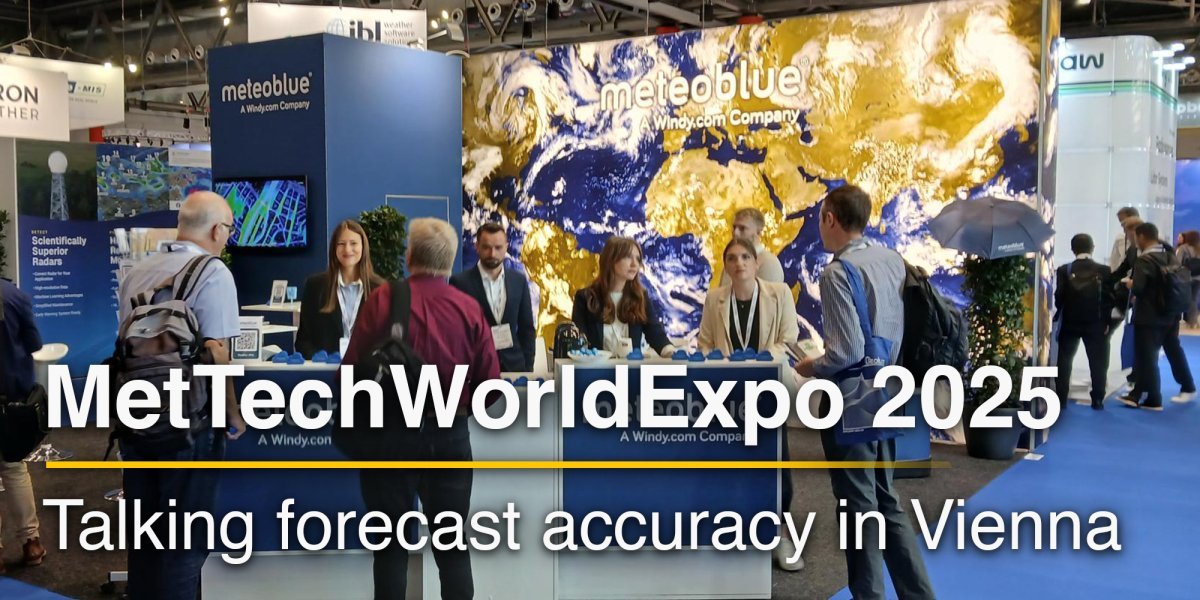
In October, the meteoblue team participated in the Meteorological Technology World Expo 2025 in Vienna, where they presented advances in precipitation forecasting and demonstrated how multi-model integration and artificial intelligence can improve forecast accuracy by over 20%. The fully redesigned booth attracted many visitors and encouraged valuable discussions with partners and technology providers.
During the event, meteoblue received several awards from the Varysian Network, including first place for Best Integration of Hydromet into Infrastructure or Smart Cities. Recognition in climate and renewable-energy categories highlighted company’s ongoing commitment to delivering actionable, high-quality weather and climate services.
In the same month, meteoblue specialists took part in the 6th DALIA meeting in Hungary, bringing together partners working towards healthier rivers across the Danube Basin under the EU Mission "Restore our Ocean and Waters". Within the DALIA consortium, particular attention was given to PET Kupa, a citizen-led initiative addressing plastic pollution in Hungarian rivers. Within the project, meteoblue contributes climate and hydrological data and expertise, supporting evidence-based approaches to improving river health and complementing citizen-led action with scientific insight.
November
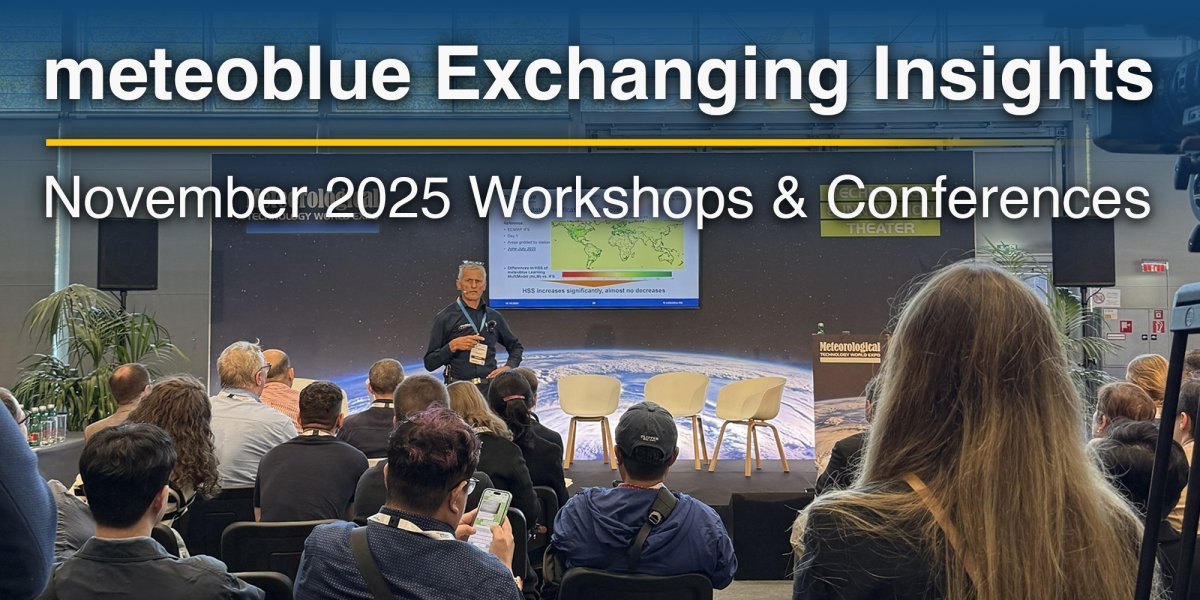
November was a month of collaboration and professional engagement. At the B.A.U.M. Conference 2025 in Dortmund, head of meteoblue Climate Services Dr. Sebastian Schlögl shared insights on identifying and managing climate risks for resilient business models, while Dr. Karl Gutbrod led the webinar "Better Weather Insights for Agriculture", highlighting practical ways to use meteorological data for crop management, irrigation planning, and climate-risk reduction.
meteoblue also connected with agricultural professionals at AGRITECHNICA 2025 in Hanover. Company team met with partners to discuss automated weather reporting, risk assessment tools, and interactive dashboards for optimising field operations. The month concluded with the participation in the Smart City Expo World Congress in Barcelona, further emphasising meteoblue commitment to urban climate resilience and sustainable solutions.
December
December rounded off 2025 with both technical innovation and team celebration. The meteoblue Weather & Maps iOS app received its most significant update to date, featuring a redesigned interface, improved performance, and intuitive navigation. New features such as hourly overviews, progressive temperature gradients, quick-access buttons, and enhanced language support make exploring weather forecasts faster and more user-friendly than ever.
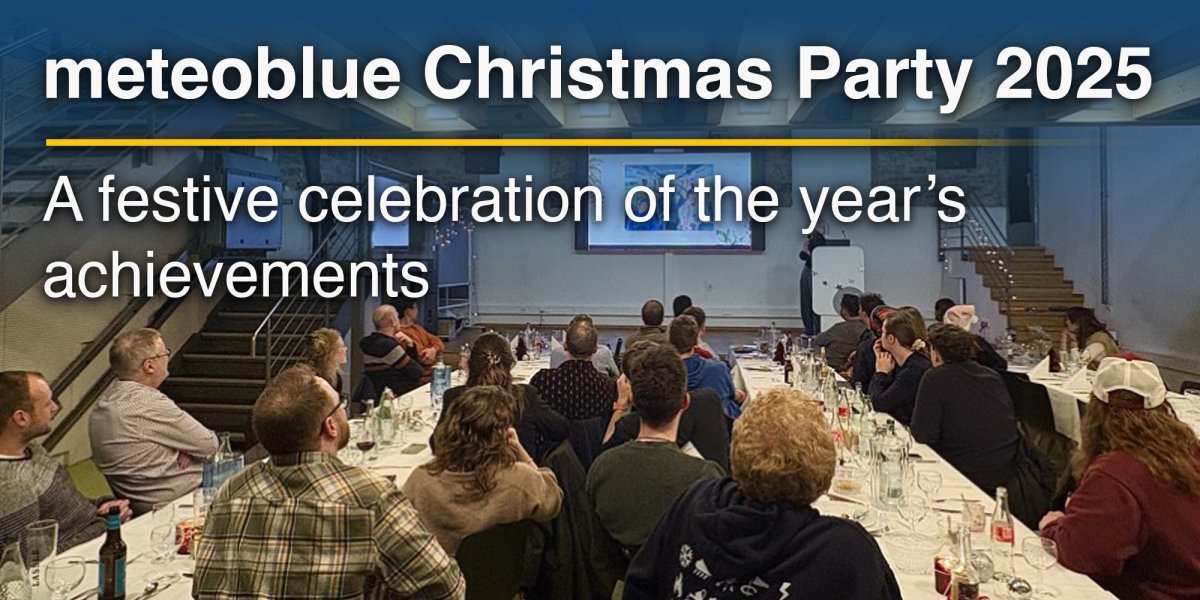
The festive season brought the annual meteoblue Christmas Party, held at the historic "Old Waterworks" in Lörrach. Colleagues gathered to reflect on 2025, celebrate achievements, and enjoy shared moments of laughter, from the Secret Santa exchange to karaoke performances. The event highlighted the spirit of teamwork and community that defines the meteoblue culture.
Moving Forward
As we close the chapter on 2025, meteoblue reflects on a year of innovation, collaboration, and impact. From advancing urban climate intelligence and renewable energy solutions to strengthening global partnerships and community initiatives, the year has set a strong foundation for the future. With continued dedication to accuracy and sustainability, meteoblue looks forward to 2026 with optimism, ready to empower communities, businesses, and cities to thrive in a changing climate.